Statement: Métis Nation of Ontario Condemns AFN National Chief’s Remarks Disregarding Métis Identity and Rights
The Métis Nation of Ontario (MNO) strongly condemns the misinformed and inaccurate remarks directed toward the Métis people by Assembly of First Nations (AFN) National Chief Cindy Woodhouse Nepinak at the First Nations – First Ministers Meeting in Ottawa.
The National Chief holds an important position of leadership and influence, one that carries a responsibility to advance the rights and interests of First Nations. It is deeply disappointing that she chose to use that national platform to diminish the identity and rights of another constitutionally recognized Indigenous people.
Canada’s Constitution recognizes three distinct Indigenous peoples: First Nations, Inuit and Métis. The recognition and protection of one people’s rights does not diminish those of another. No Indigenous leader should seek to advance the rights of their own people by denying the identity, history or constitutionally protected rights of another.
The Métis are a distinct Indigenous people whose identity, culture and way of life emerged through ethnogenesis (i.e. the formation of a new people) well before Canada became a country. Métis history is deeply rooted in the lands and waterways of the historic North-West, including what is now Northern Ontario and the Upper Great Lakes area.
That history is also one of longstanding relationships, mutual recognition and cooperation between Métis and First Nations.
In 1849, two decades before the Red River Resistance, Anishinaabe and Métis stood together in opposition to mining interests during the “Mica Bay Uprising”.
In the Upper Great Lakes, Anishinaabe Chiefs urged the Crown to recognize and deal with the Métis as a distinct people, acknowledging their “inheritance in the country equal to our own.”
Respected Anishinaabe leader Chief Shingwaukonse recognized the right of his Métis kin to determine their own political future. He asked whether they wished to come under his protection or continue to represent themselves, and respected their decision to maintain their distinct identity and representation.
In Northwestern Ontario, following the negotiation of Treaty No. 3 in 1873, Chief Mawedopenais acknowledged the important contributions of the Métis, declaring, “I wish you to understand that you owe the treaty much to the Half-breeds.” Two years later, with the support of Anishinaabe Chiefs, the “Half-breeds of Rainy River and Rainy Lake” negotiated their own adhesion to Treaty No. 3.
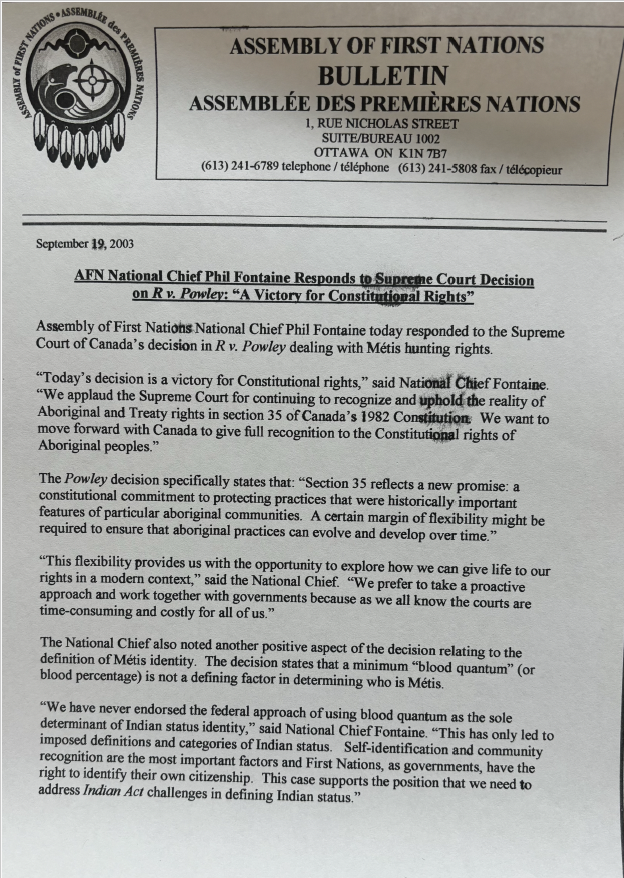
In 2003, the then National Chief applauded the Powley decision, which affirmed that Métis rights are constitutionally protected under Section 35, calling it “a victory for Constitutional rights”.
These are just some examples of the shared history between Métis and First Nations that National Chief Woodhouse chose to ignore and disrespect today.
The same rule of law that require governments to recognize and respect the rights of First Nations equally require them to recognize and respect the rights of the Métis. These constitutional protections are not a matter of political preference, nor are they subject to the approval of other Indigenous leaders.
The MNO looks forward to a day when future First Nation leaders will once again see the value in revitalizing the collaborative relationship we once shared, to advance our respective peoples’ rights in this great country we were partners in creating. When they’re ready, we will be here. Because Métis people and Métis rights are here to stay.