
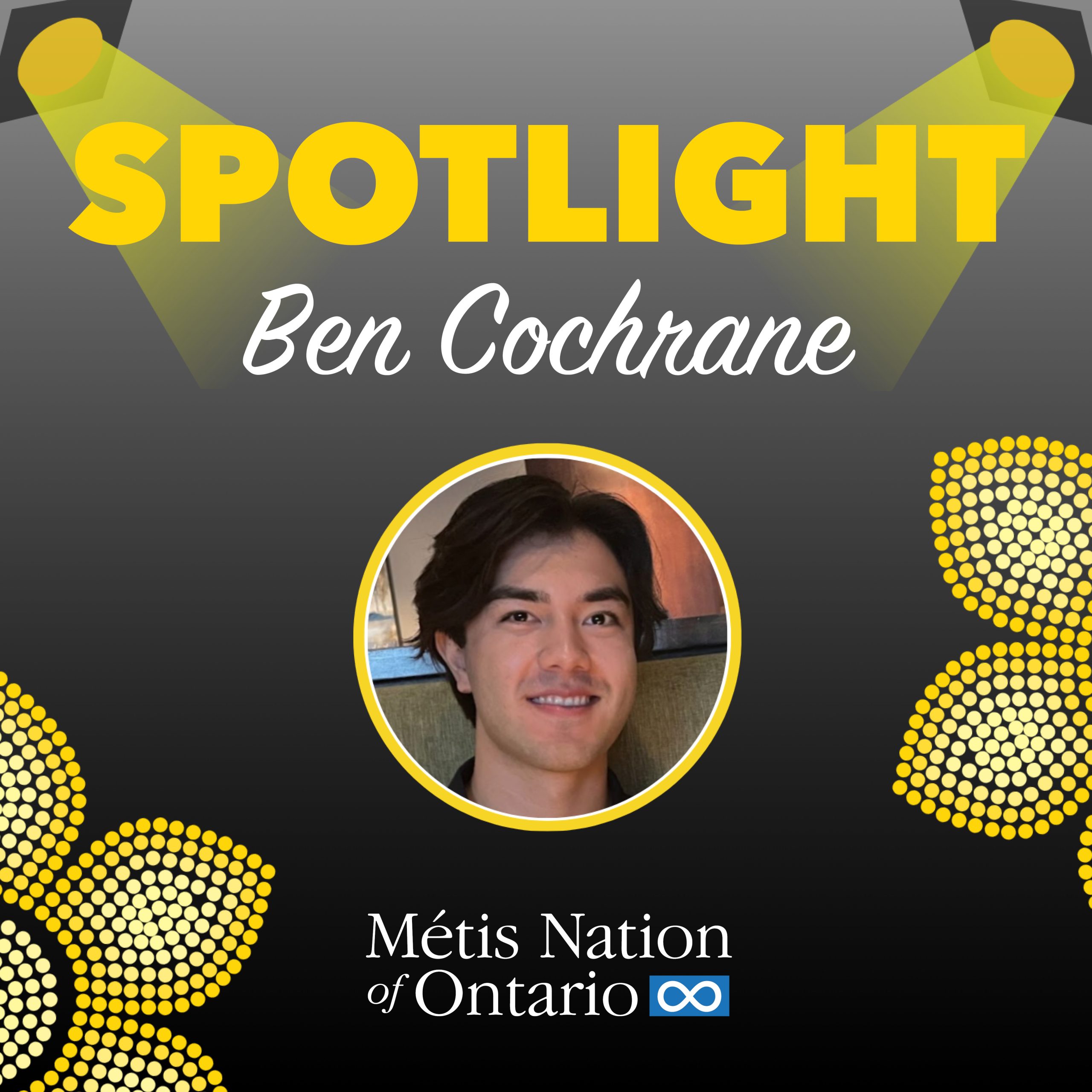
Q: Hi Ben, tell me about yourself! What do you like to do for fun in your spare time?
A: I am entering my first year of the Undergraduate Medical Education program at the Northern Ontario School of Medicine (NOSM). I recently completed my Honours Life Sciences degree at Queen’s University and am very passionate about health, medicine, and community engagement.
I spend a lot of my free time staying active. I grew up playing Tier 1 hockey, and fitness remains a big part of my life today. I enjoy working out, playing pick-up basketball and hockey, and spending time outdoors. I also love spending time with friends and family and being involved in initiatives that support students and build community, which is why I got involved with Infinite Reach.
Q: Tell me more about the importance of community in your life. How have you found community at Queen’s University?
A: Coming from a military family, it was difficult to put down roots in any one place during my childhood. I was born in Halifax and lived in Nova Scotia until Grade 7. In 2017, my family was posted to Colorado, where my dad worked at NORAD and where I spent most of my high school years. In 2021, we moved back to Ottawa, and in 2025 my family relocated to Victoria, B.C.
Growing up, my connection to my family’s Métis roots was limited, but attending Queen’s University gave me opportunities to learn more and become involved in Indigenous student communities. Through organizations like the Four Directions Indigenous Student Centre and STEMina, I was able to participate in cultural events, build relationships with Indigenous students, Elders, and faculty, and find a strong sense of community. Those experiences also led me to become involved with initiatives like the Infinite Reach Facilitator program and the Indigenous Student Engagement Circle at Queen’s, both of which are focused on supporting Indigenous students and strengthening the post-secondary experience.
Q: What inspired you to pursue the Life Sciences program at Queen’s? How did you first discover this was a field you wanted to enter?
A: Since I was a child, I’ve had several allergies, the most prominent of which is my anaphylactic peanut allergy. Around seven years old, I was hospitalized after a near fatal exposure to peanuts. I vividly remember being amazed with how the healthcare team came together to bring me back into good health which left a lasting positive impression on my perspective of healthcare. Having a severe allergy served as a gateway to my curiosity in the biomedical field of which branched out to the broader scientific field in relation to human health and functioning. I made the decision that Life Sciences would continue to further my education in my interests and help prepare me for my goal of pursuing a career in medicine.
Q: Why is science so important in 2026?
A: Science shapes every part of our lives. From healthcare, to technology, to environmental stability, our understanding of the way the world works determines how we respond to modern day problems; anything from outbreaks in disease, population-wide mental health, climate change, or other obstacles we come across. The more well-versed we become in any topic, the more specific we can be in the way we treat, manage, and/or take proactive measures for people and the planet.
Q: You’re currently an Infinite Reach Facilitator. How did you first learn about the Infinite Reach Student Solidarity Network, and what made you want to register for it?
A: I first learned about the Infinite Reach Program through conversations with past Infinite Reach Facilitators and staff at the Four Directions Indigenous Student Centre at Queen’s University. What immediately stood out to me was the opportunity to help build a stronger Métis student community through events that bring students together to learn, connect, and support one another. I was also excited by the opportunity to help raise awareness of the many MNO programs and services available to Métis students, including financial assistance, travel supports, and tutoring. These resources can play an important role in helping students overcome barriers and succeed in post-secondary education.
Q: What are the benefits of Infinite Reach for post-secondary Métis students? What is unique about what it offers students? How has it helped you?
A: The MNO has played an important role in my post-secondary journey as a Métis student. Through MNO programs and services, I have been able to connect with other Métis students, access financial assistance, and receive academic support through tutoring services. These supports helped reduce some of the financial and academic pressures that can come with post-secondary education while also providing a strong sense of community.
As an Infinite Reach Facilitator, I helped organize information sessions and cultural events for Métis students at Queen’s University. These events promoted the many supports available through the MNO, including mental health counselling, academic counselling, disability services, housing supports, and health services. It was rewarding to help connect other students with the same kinds of resources that supported me when I first arrived at university.
Q: What are you most proud of in your time as an Infinite Reach Facilitator thus far?
A: The event that I am most proud of is helping host the “Weaving the Threads” Métis celebration and gathering. The event was a collaboration between the AMS Social Issues Commission and the Infinite Reach Facilitators at Queen’s. The event was open to all students, staff, and faculty, and aimed to educate the wider Queen’s population on Métis culture. The event featured educational videos, interactive group discussions, and activities like finger-weaving and beading, with food and refreshments provided. It was very special to be able to share our culture with many who had not previously had the opportunity to attend an Indigenous event. Overall, the event was a huge success.
Q: How has your Métis background had an impact on your life and how you think of yourself?
A: I grew up in a military family, meaning I lived in various locations across Canada and the United States. This lifestyle made it difficult to build strong connections with the Indigenous lands and communities where I lived.
I have been fortunate to learn about Indigenous cultures beyond my own by taking Indigenous history courses, connecting with other Indigenous students, attending cultural events, and learning from Elders through fireside talks. As a Métis student, I am proud to come from a culture rooted in resilience, independence, and appreciation. These people, places, and experiences have reinforced the importance I place on empathy, collaboration, and perspective. They continue to shape how I approach my roles as a member of the University Indigenous Student Engagement Circle, an Infinite Reach Facilitator, and within the healthcare system, helping ensure the people I work with feel respected, heard, and culturally safe.
Q: What advice would you offer to a younger version of yourself or students currently battling through adversity?
A: I would tell them to be patient with themselves and not let difficult moments convince them that they are incapable of succeeding. Everyone faces hardships; however, what defines your experience is how you interpret and respond to those moments. I would strongly encourage them to be forgiving towards themselves and remember that when pursuing their goals, it is often a marathon rather than a sprint.