
Métis filmmaker reflects on culture and career as new film hits festival circuit
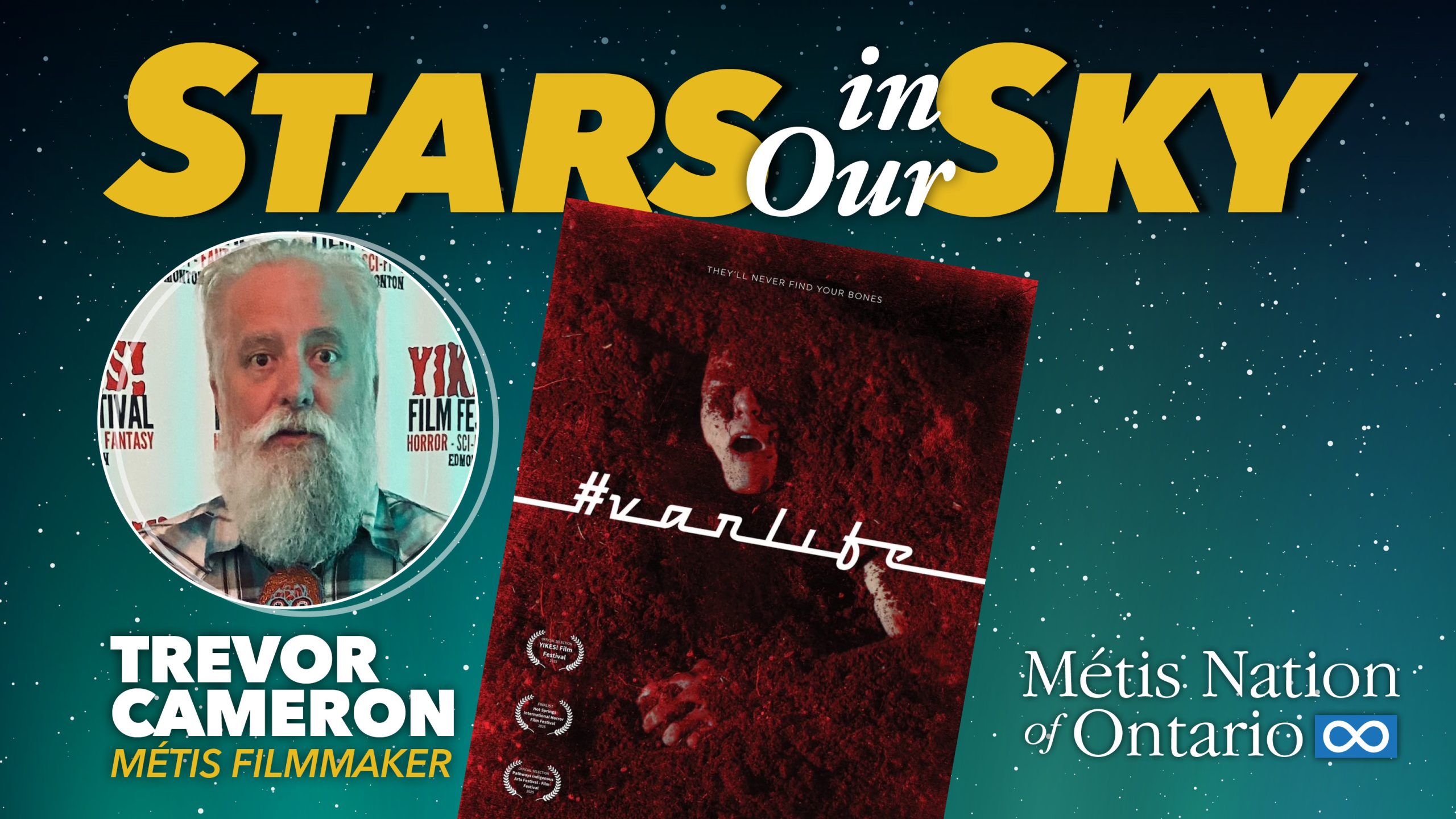
Métis filmmaker Trevor Cameron has spent more than two decades telling stories through film and television. From children’s programming and documentaries to supernatural thrillers, his work blends entertainment with deeper explorations of history, culture, and identity.
Now based in Toronto, Cameron’s journey reflects a path familiar to many Métis citizens—shaped by movement across the country and a commitment to staying connected wherever life leads.
Cameron’s family roots trace back to the Duck Lake, Saskatchewan area, with family names including Dumont and Archambault. After the Second World War, his grandparents sold their farm and moved west, beginning a life that saw Cameron grow up moving across Canada.
“My mom was in the Air Force, so we moved around quite a bit,” Cameron said. “I’ve lived coast to coast.”
Those experiences helped shape his perspective on community. Wherever he has lived, Cameron has sought ways to stay connected with local Métis organizations and citizens. Today he volunteers as a councillor with the MNO Toronto York Region Métis Council.
Cameron’s filmmaking career began more than 20 years ago with the children’s television series Wapos Bay, a stop-motion production filmed in Saskatchewan and produced by APTN.
Since then he has built a career as a writer and story editor, working on projects including the APTN supernatural drama Rabbit Fall. His work spans genres but often explores themes connected to Indigenous history and storytelling.
One of Cameron’s notable projects is the documentary Shadow of Dumont, which explores the life and legacy of Métis leader Gabriel Dumont. Rather than presenting a traditional historical documentary, Cameron travelled to locations connected to Dumont’s life to uncover where artifacts and historical pieces ended up.
The journey took him across North America—from the Prairies to Bismarck, North Dakota, where Dumont’s medal is housed, and Cody, Wyoming, where photographs from the 1885 Resistance are preserved.
“I didn’t want to do a traditional documentary,” Cameron said. “I wanted to follow in Dumont’s footsteps and see where his story had travelled.”
The project resonated with audiences and later inspired a spin-off series exploring other Indigenous historical figures.
Cameron’s latest project was inspired by another road trip while travelling for documentary work. Long stretches living out of a van sparked an idea for a film challenging the romanticized version of “van life” often seen online.
The resulting supernatural thriller follows a couple who run a popular van-life social media channel while navigating grief and unresolved trauma. The film blends psychological tension and horror elements with deeper themes about identity and belonging.
Cameron was also intentional about casting, assembling a largely Indigenous cast that includes established actors Michelle Thrush and Dakota Hebert alongside rising Indigenous talent.
The film was shot in Regina using a “volume wall,” a large LED stage that projects moving environments behind actors rather than relying on traditional green screens.
It is now making its way through the festival circuit, with screenings including the Moose Jaw Film Festival and the Golden State Film Festival in Hollywood.
For young MNO citizens interested in filmmaking, Cameron emphasizes mentorship and persistence.
“Find a mentor,” he said. “Someone who can read your work, give you honest feedback, and help you navigate the industry.”
He also encourages aspiring filmmakers to study scripts and storytelling techniques, and suggests children’s television as a practical entry point into the industry.
After more than two decades in the industry, Cameron continues to explore new ways of telling stories that resonate with audiences while reflecting Indigenous experiences.
“Storytelling is how we connect,” Cameron said. “It’s how we understand where we’ve been and where we’re going.”