
Across the water, across generations



Nearly two centuries ago, Louis-George Labatte and his family found themselves facing another difficult journey across Georgian Bay.
The Labattes were among the Métis families who had relocated from Drummond Island after Britain ceded the island to the United States following the War of 1812. In 1828, they travelled by bateau with other Métis families to the Penetanguishene area, rebuilding their lives along Georgian Bay.
Six years later, winter weather again interrupted the family’s travels. After being shipwrecked near Christian Island, they attempted to return to Penetanguishene, but thick ice stopped their progress. They reached the shores near what is now Thunder Beach, where they built a place to winter and later the log home that would stand for generations.
For generations, that house stood on that shore — a physical connection to the Labatte family and the history of the Georgian Bay Métis Community.
In October 2026, Labatte House made another remarkable journey.
—
After months of planning, the nearly 200-year-old Labatte House was relocated from Thunder Beach to a new home at 159 Balm Beach Road East in Tiny Township.
Over the course of one week, the house travelled by road and barge around the Tiny Township peninsula, supported by engineers, contractors, heritage specialists, researchers and Métis Nation of Ontario staff.
The relocation brought the house under MNO stewardship and marked a major step in plans to preserve it, restore it and eventually make it accessible to Métis citizens and the public.
For generations, Labatte House remained in the Labatte family before being sold in the early 1900s. It later became a summer cottage and was cared for by the Hardcastle-Roebuck family for nearly 50 years.
When the opportunity arose to secure the historic structure, the Hardcastle-Roebuck family transferred the house to the MNO for a symbolic $2, helping make its preservation possible.
The acquisition also delivered on direction from MNO citizens through the Revitalizing Our Stories, Histories, Alliances and Relationships strategy, adopted at the 2023 Annual General Assembly.
The original Thunder Beach location remains an important part of the house’s story, but the property was privately owned and the house was not publicly accessible. The MNO worked with the Township of Tiny and project partners to relocate it to 159 Balm Beach Road East, where it can be preserved, restored and eventually opened to Métis citizens and the public.
No small undertaking
“Moving a historic house is no small undertaking,” said MNO Provincial Secretary of Economic Development and Government Infrastructure Kathleen Anderson. “And moving one that’s almost 200 years old across Georgian Bay? Well, that’s something else entirely!”
The relocation required months of work involving engineers, contractors, heritage specialists, researchers and MNO staff.
Facet Group Inc., which specializes in moving heritage structures and served as the project’s engineering and general contractor, took on a challenge that was new even for its experienced team. Labatte House was the oldest structure the company had ever moved.
Before the move could begin, crews reinforced the building, separated an addition and installed steel supports beneath the structure.
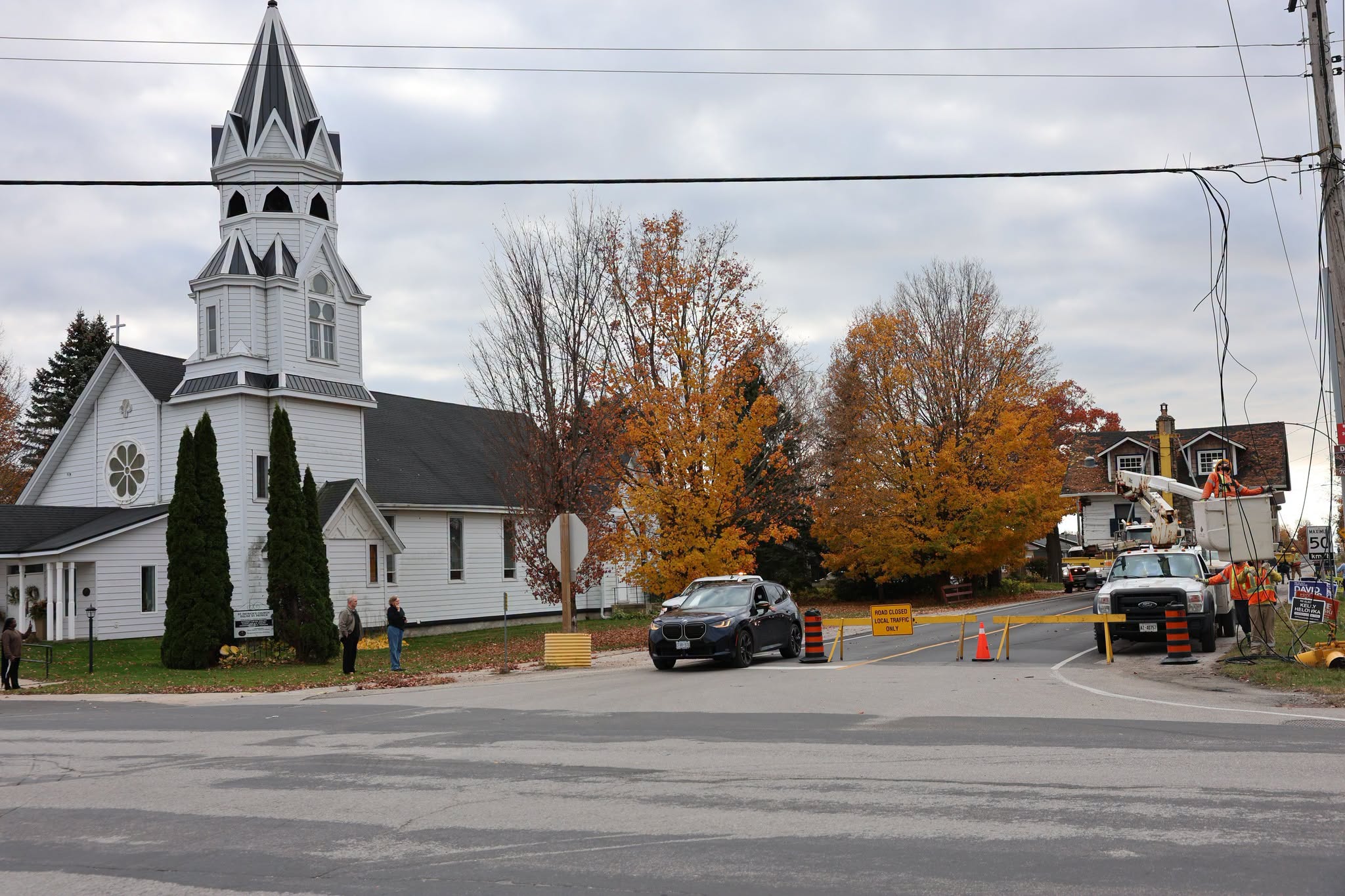
On October 19, crews began moving Labatte House from its longtime location on West Shore Drive toward the Thunder Beach shoreline.
The house travelled slowly along the route, supported by a steel framework. Its age, weight and construction demanded precision, particularly around the large stone chimney, which remained in place with additional bracing.
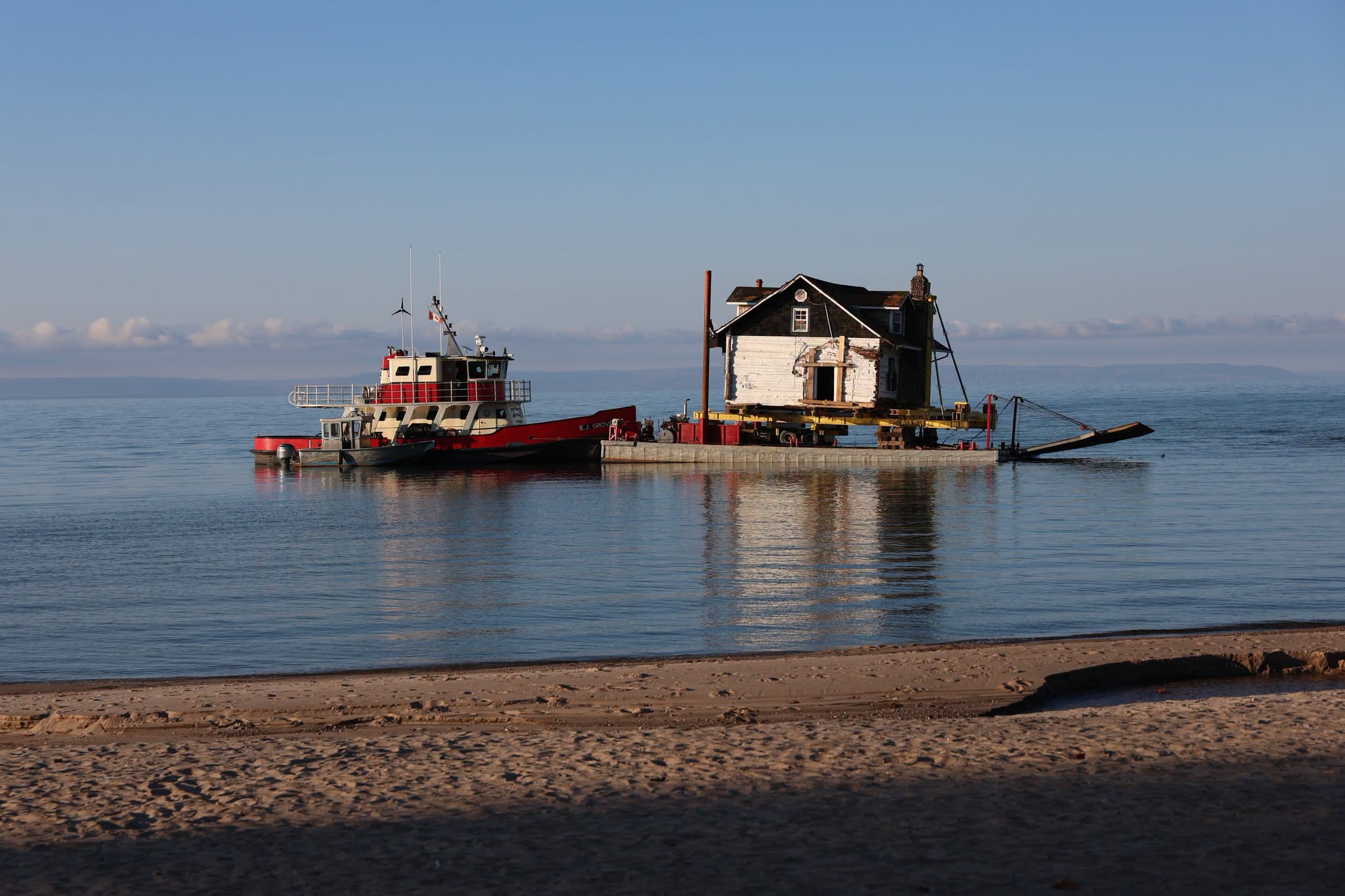
On October 21, the approximately 38-tonne structure reached the water. Crews spent much of the day manoeuvring it onto a barge and securing it for the trip around the peninsula.
“It’s a big step. Getting on the barge was the most challenging part, but we have a great team,” said Neil Puype, principal engineer at Facet Group.
That evening, after nearly two centuries in the same location, Labatte House left Thunder Beach by water.
The following morning, it arrived off Balm Beach, where crews brought it ashore and prepared it for the final leg of the move.
From there, Labatte House travelled by road to 159 Balm Beach Road East and its new home under MNO stewardship.
Welcoming Labatte House
On October 24, MNO citizens, Labatte descendants, community members, project partners and guests gathered at the new property to celebrate the house’s arrival.
Among those in attendance were President Margaret Froh, MNO Provincial Secretary for Economic Development and Government Infrastructure Kathleen Anderson, Provincial Secretary for Métis Rights, Inter-Governmental Relations & Communications Mitch Case, the Hardcastle-Roebuck family, Tiny Township Mayor David Evans, Penetanguishene Mayor Doug Rawson, MP for Simcoe North Adam Chambers and Métis historian and lawyer Zac Thiffault.
The afternoon gave citizens a chance to see the new site, learn more about the history of Labatte House and hear about the work still ahead.
MNO President Margaret Froh reflected on the significance of preserving such a rare physical connection to Métis history.
“I’m very proud of the work done to preserve this piece of Métis history and culture,” said Froh. “To be able to have a piece of Métis history like this, a house that’s almost 200 years old, is a really rare opportunity in this country, especially with the history of Métis displacement.”
The celebration also recognized the Hardcastle-Roebuck family, whose care for the house over nearly five decades helped ensure its survival, as well as Facet Group and the many contractors and project partners involved in the move.
For the Georgian Bay Métis Community, the arrival of Labatte House offered something tangible to gather around — a home built by a Métis family nearly two centuries ago and now preserved for generations to come.
The work continues
The move was a major milestone, but it was not the end of the project.
Labatte House will remain elevated and protected through the winter. A permanent foundation is planned for spring 2027, followed by further restoration and site development.
The long-term vision is for Labatte House to become a publicly accessible historic site where Métis citizens and other visitors can learn about the Labatte family, the Georgian Bay Métis Community and the broader history of the Upper Great Lakes Métis.
The MNO also intends to work with the Township of Tiny toward municipal heritage designation once the house is permanently situated.
Nearly two centuries after shipwreck and thick ice interrupted a Labatte family journey across Georgian Bay, the house they built has crossed the water too — this time by design, on its way to a new home.
Now safely at its new site, Labatte House is ready for the next stage in its preservation and a new chapter under Métis stewardship.