
Bat Week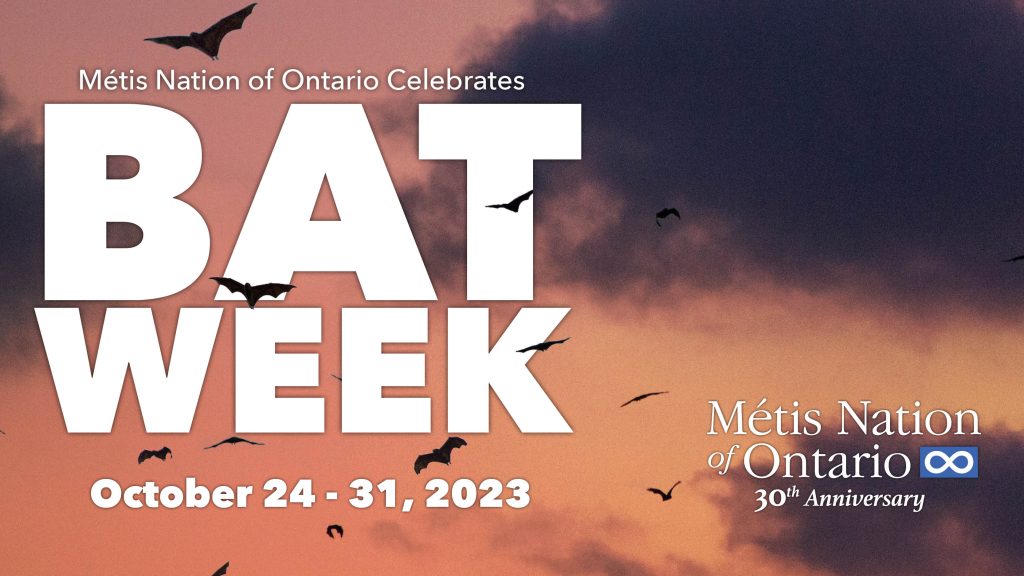 is an international, annual celebration of the role of bats in nature and the importance of bat conservation. Bats are amazing creatures that are vital to the health of our natural world and economy. Although we may not always see them, bats are hard at work all around the world each night – eating tons of insects, pollinating the flowers, and spreading seeds that grow new plants and trees.
Bats are the second-most abundant mammal (after rodents) in the world with over 1400 species worldwide, however bats are in decline nearly everywhere they are found. These animals face several threats including habitat loss, pesticide use, destruction of roost sites, climate change and more. Worldwide, about 24% of bats are considered critically endangered, endangered, or vulnerable. Bat numbers in Canada and the United States have declined dramatically as a new disease, White-Nose Syndrome (WNS), has killed over six million bats in just eight years. This, coupled with impacts from wind energy, habitat alteration, roost disturbances and climate change, has caused serious decline in bat populations in North America and around the world.
Here are some actions you can take to help protect and promote bats in your area:
Recently, MNO staff and citizens in Region 7 have also been involved in Native Bat monitoring and conservation work in partnership with the Toronto Zoo and the Nuclear Waste Management Organization. Read more about this great work through the articles on the MNO’s website:
Volunteer appreciation event in Midland for bat conservation citizen scientists
MNO Citizens’ Research Presented at COP15: UN Biodiversity Summit in Montreal
Bat Fun Facts:
- Bats come in many sizes – from weighing less than a penny (bumblebee bat) to having a wingspan of up to 6 feet (flying foxes)
- Bats have rather good eyesight (similar to humans), but still use echolocation as their main technique to navigate or hunt prey
- Bats are the only mammal that can actually fly- others can “glide” but cannot actually take flight on their own
- There are eight bat species in Ontario: the hoary bat, the eastern red bat, the silver-haired bat, the big brown bat, the tricoloured bat, the little brown myotis bat, the northern long-eared myotis and the eastern small-footed myotis
- A single little brown myotis bat can eat up to 600 mosquitoes in one hour!